
How to Check for a Warrant in Marion County
Read the citation or court paper before anything else. It names the office that issued the process. Marion County splits warrant records across felony files, precinct matters, and city citations, so no one channel covers them all. The Sheriff’s official page links a current-inmate roster. That roster answers custody and booking questions. It does not answer whether every unserved warrant exists. When you call, have the exact name from the court paper plus any citation, case, or docket number. Ask the clerk whether the record shows an active warrant, capias, capias pro fine, or another hold. Then ask what written proof follows once the matter is resolved. A name match is only a lead in Marion County, never a final answer.
- Match the matter to Jefferson, Ore City, Avinger, JP1, JP2, or a district court by checking the issuing-court line.
- Use the Marion roster only for current booking context; its optional name filter does not search every warrant.
- For Ore City, read the official current-list notice beside the list link and treat its coverage as city-only.
- Call the issuing clerk when the online route is absent or unclear. Ask about status, balance, appearance, and recall.
- For custody or county routing, call the Sheriff. For a serious or uncertain matter, get advice from a Texas attorney before appearing.
Marion County Roster Is Not a Warrant List
The county-linked InteropWeb screen sorts its data into Current Inmates, 24 Hours Arrests, and Inmates by Arrest Date. A name filter is optional. A Search Inmates button runs the query. Results can carry arrest date, source agency, days in jail, total bond, and a warrant-linked table showing Warrant #, Counts, Statute, Description, M/F, and Bond Amount. The blank Marion County search controls are the starting view. Each result ties warrant fields to a booking record, not to a countywide index. Marion County publishes no completeness promise or refresh schedule for such a list. A blank result cannot clear a court matter either. Open the roster interface to see the search screen itself. The issuing clerk confirms current court status.
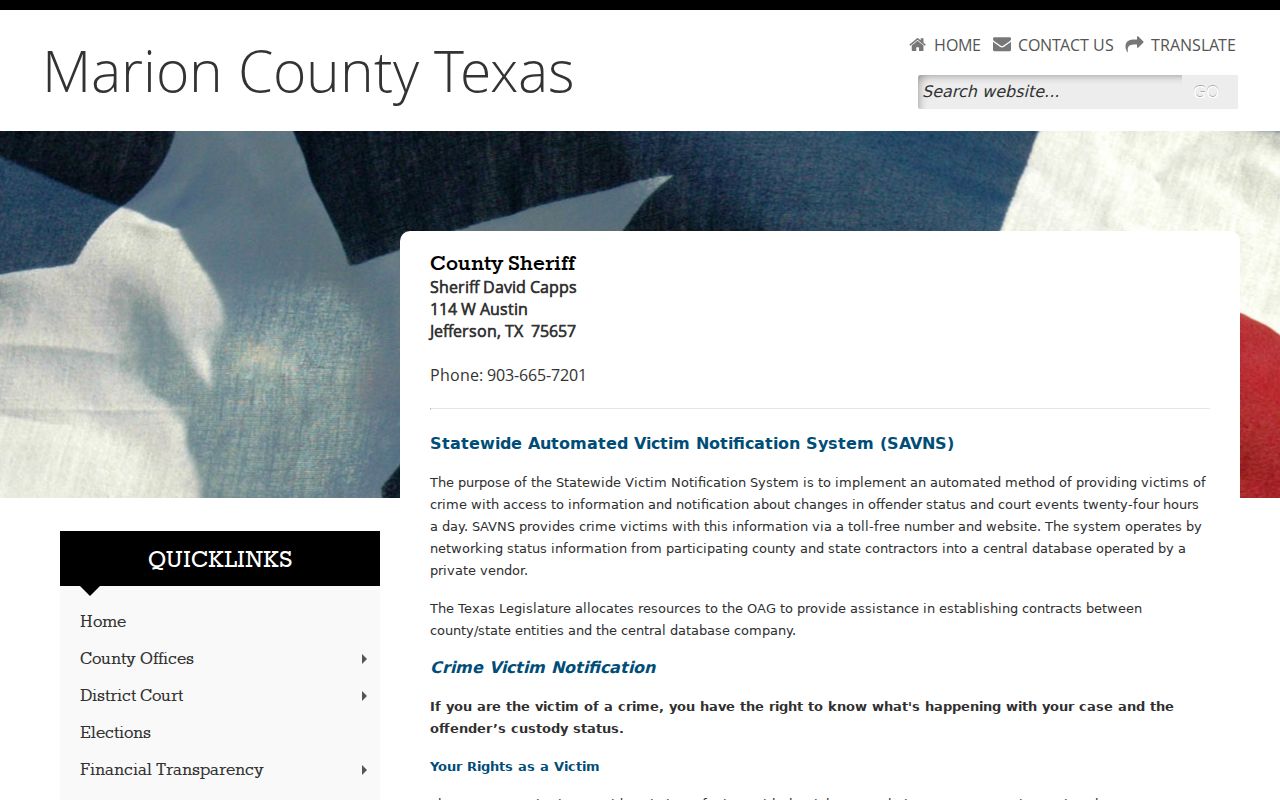
The Sheriff page is Marion County’s official route to the vendor-hosted roster and the general office line, 903-665-7201.
Types of Warrants in Marion County
In Marion County, the type of process and the court level point you to the right record. Felony arrest process generally belongs to District Court. City ordinance and Class C traffic matters stay with municipal or JP courts. A search warrant, by contrast, covers evidence at a place or thing, not a public self-check.
| Warrant Type | How It Arises | Who Issues It |
|---|---|---|
| Arrest warrant | Complaint or sworn facts support probable-cause review. | Judge or magistrate with authority. |
| Bench warrant | Missed setting or court-order noncompliance. | Court handling the underlying case. |
| Search warrant | Probable cause to search a stated place, person, or thing. | Authorized judge or magistrate. |
| Capias pro fine | Fine-enforcement process after a municipal or justice-court matter. | Issuing lower court under Texas procedure. |
Marion County Courts Hold Different Warrants
Which court holds your warrant depends on the paper you were handed. A city citation goes to that city's Municipal Court. A precinct citation lands with JP1 or JP2, while a felony case runs through the 115th or 276th District Court and the District Clerk. None of these Marion County offices share one public search screen. Texas trial courts divide the work by jurisdiction, and the Texas courts overview walks through the district, county, justice, and municipal levels. In Marion County, reading the court name printed on the notice beats starting with a broad web search.

The chart sorts Marion County courts by jurisdiction. It is no warrant database. The clerk of the court named on a warrant is the one to call for status.
What a Marion County Warrant Record Shows
The state overview shows jurisdiction headings, not a Marion County warrant database. The clerk of the named court remains the status contact.
| Warrant number | Format not published The local identifier format was not documented. |
|---|---|
| Counts / statute | Roster fields linked to the booked matter; confirm the court file for meaning. |
| Description | Plain-language roster label, not a finding about a person. |
| Issuing court | Read the case paper or ask the clerk; one roster row does not name every authority. |
| Bond amount | Booking display only. Confirm the current order; bond is not the fine balance. |
| Status | Ask the issuing court whether process is active, served, recalled, or otherwise cleared. |
Ore City Warrant List Carries Warnings
Ore City runs the only official current-warrant list among Marion County's local courts. The list itself lives in a Google Sheet. The landing page offers no search form. It does say the information is current when posted, though the sheet's column names and date fields can change, so read with care. The official Ore City list page is city-specific. It covers nothing from Jefferson, Avinger, JP, district, or federal process.
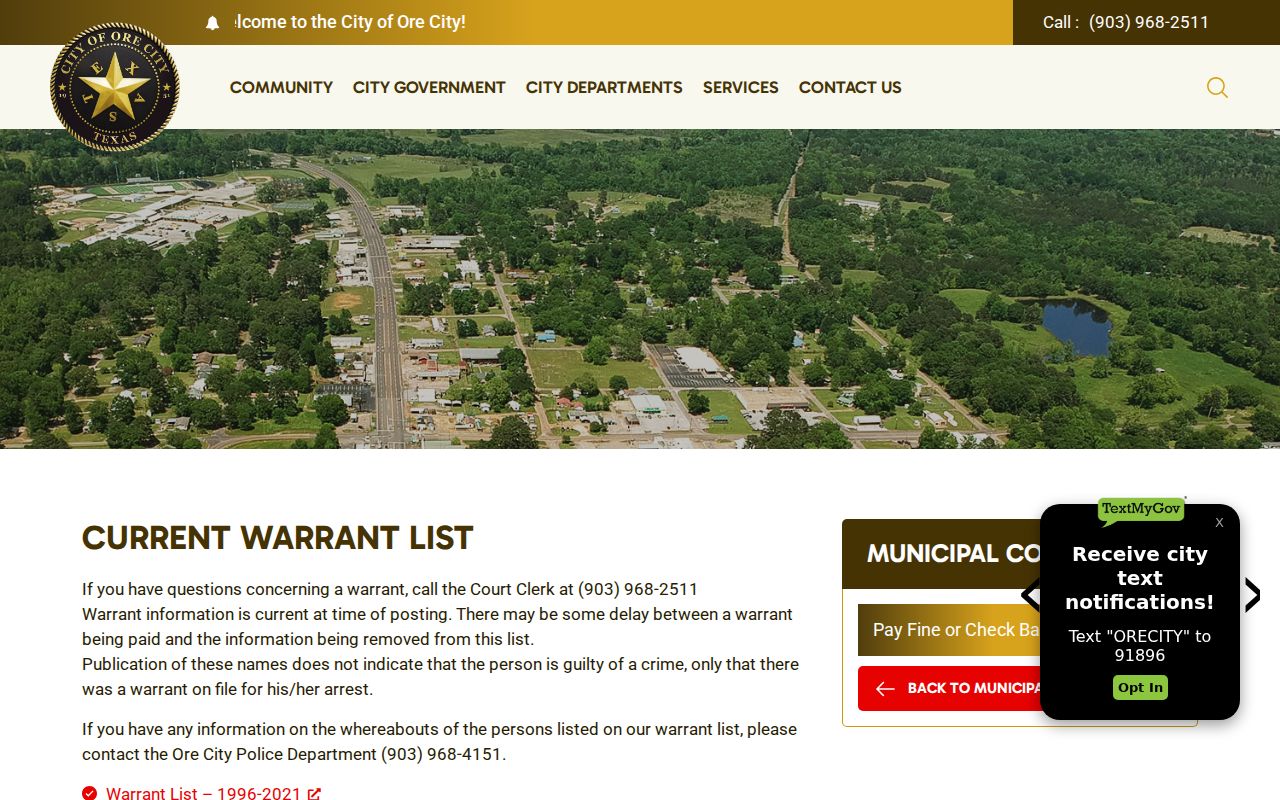
A name on or off the list settles nothing. Call Ore City Municipal Court at 903-968-2511 about the current case and its next court date.
Who Issues and Serves Marion County Warrants
Courts and magistrates issue warrants within their own authority. Execution falls to the Sheriff, city police, assigned constables, or another peace officer. Marion County posts no constable roster or full service map. For a specific paper, ask the issuing court which agency handles service.
Marion County Clerk Routes Match the Case
The 115th and 276th District Courts are Marion County’s felony trial courts. District Clerk Susan Anderson handles their criminal-file route at Room 303 in the courthouse. County Clerk Kim Wise works from Room 206 and keeps a separate set of county-court and county-clerk records. Neither clerk page describes a single public warrant database. The District Clerk’s page lists office details and record services, and the County Clerk’s page lists its separate office. Ask which clerk maintains the case before requesting a file.
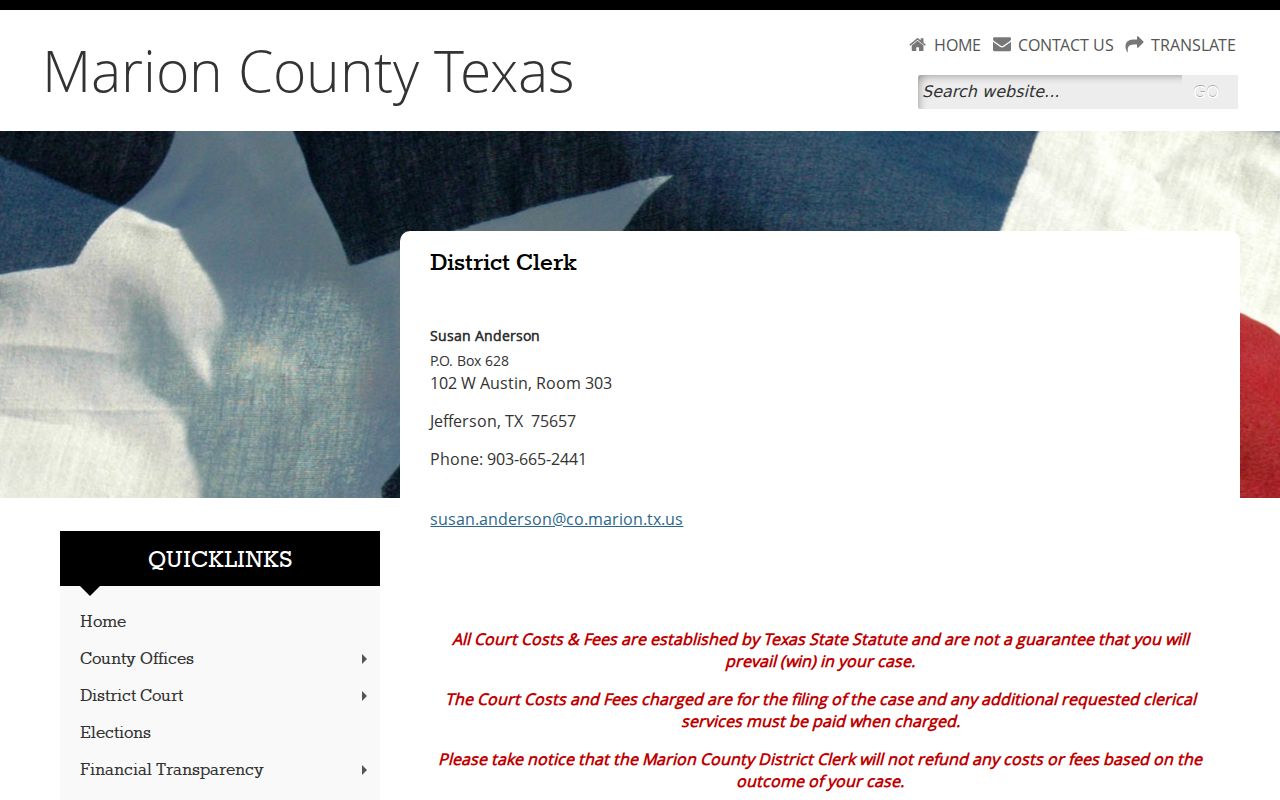
The office listing helps route a records question to the right desk. It promises no access to sealed or protected material. The County Clerk’s official page lists its separate public office and records route for Marion County.
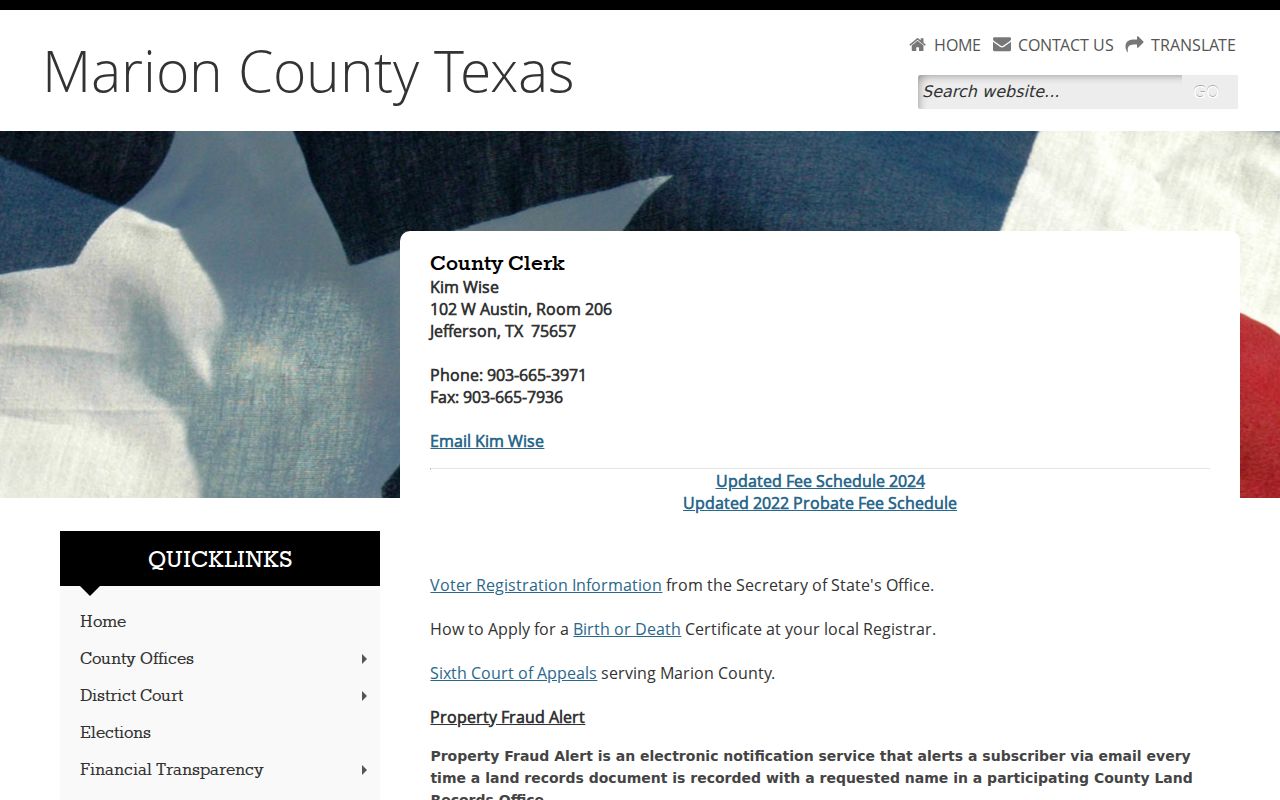
In Marion County, the County Clerk and the District Clerk keep different records, so confirm the court and the record type first.
Marion County Warrant Offices Have Separate Roles
The Marion County courthouse at 102 W Austin puts the District Clerk, the County Clerk, and courtroom routing in one place. The Sheriff sits elsewhere, at 114 W Austin. Each office answers a different question. A clerk's file shows what a court has done, while the Sheriff roster shows who is currently held. Courthouse hours are posted. No office names a dedicated warrant window, bond counter schedule, or walk-in surrender service. The county home page also highlights the historic 1913 courthouse. That is local color, not procedure, so call ahead and ask which office should receive your request.
The county home page provides courthouse and office navigation.
The Marion County courthouse photo is context only. It is not a promise of a one-stop warrant counter.
What to Do If You Have a Marion County Warrant
First, confirm the issuing court and ask what process is still open. Then ask about options. Marion County courts vary on payment plans, resets, deferred disposition, driving-safety courses, hardship hearings, attorney walk-throughs, and voluntary appearances. No single county rule covers every court. An attorney can ask the court about recall or quash options and explain whether bond or an appearance is required. Save every receipt, recall order, and reset notice. Ask when the clerk will update the record. A jail booking or a payment screen alone does not close the underlying case.
Important: Confirm the warrant and court instructions before appearing; a lawyer can help arrange a lawful resolution and explain the risk of an arrest during law-enforcement contact.
Marion County Bond and Recall Differ
Bond, commissary deposits, citation payments, and warrant recall are separate matters in Marion County. The Sheriff page links inmate-deposit vendors. Those are not bond portals. The county posts no bond schedule, bond-window hours, accepted payment methods, or approved bondsman list. JP2 wants a docket number and fine amount first. Its payment path then takes a card. Ore City's safe harbor covers its own active Class C warrants, and in every case the issuing court must say whether payment recalls process or another hearing remains.
Keep the payment receipt, then ask the issuing clerk for a recall or clearance record and any remaining court date.
Public Access to Marion County Warrant Records
The Texas Public Information Act, Government Code Chapter 552, covers requests for existing public information. You can ask for a written policy, fee schedule, aggregate counts, roster field definitions, or a blank form. The Marion County Sheriff's pages publish no request form. No dedicated warrant email exists either. Access has limits. Juvenile, sealed, expunged, protected-victim, grand-jury, and active-investigation material may be withheld or restricted. A governmental body may seek an Attorney General ruling under the statute. A blank roster screen does not establish that no court process exists.
Key Rules:
Texas Government Code Chapter 552 sets public-information access and its exceptions.
Texas Family Code Chapter 58 restricts juvenile records and related information.
Texas Code of Criminal Procedure Chapter 15 addresses arrest-warrant issuance and execution.
Marion County Warrant Roundup Status
Marion County runs no countywide warrant roundup, amnesty week, reward program, or Sheriff most-wanted page. Ore City's safe harbor is a city court policy. It is not county amnesty. Nor is the municipal list a countywide roster. A privacy-safe records request can seek an existing policy, an aggregate count by court and date range, or the roster's update schedule without asking for names. The Texas Attorney General's request guidance explains delivery and response steps. The city records forms offer local examples.
Warrant Records by City in Marion County
Jefferson, Ore City, and Avinger are Marion County's three municipal-court cities in the 2020 Census incorporated-place table. Each city handles warrants differently. Jefferson routes people to its clerk. Ore City publishes a warned current list plus safe harbor, while Avinger leans on a dated directory contact.
Jefferson Warrant Records
1,875 residents in 2020 · city court and police contact, no public warrant portal located
Ore City Warrant Records
1,108 residents in 2020 · current-list notice and city safe-harbor route
Avinger Warrant Records
371 residents in 2020 · dated OCA phone contact, verify before travel
The Census table ranks Marion County cities by population alone. It measures people, not warrants, arrests, or court volume.
The official Census table lists the three incorporated places.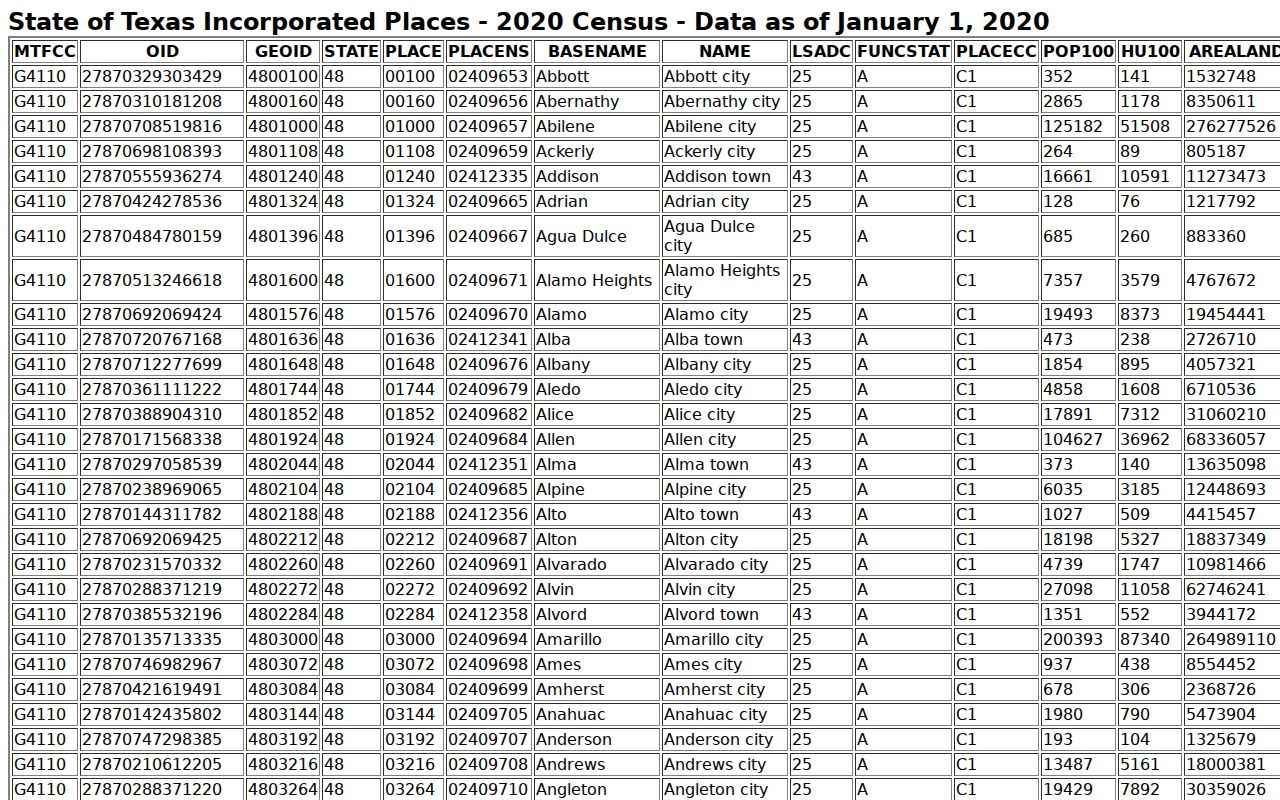
Jefferson, Ore City, and Avinger are the only municipal-court cities in Marion County, so these three profiles complete the city list.